3D Realistic Percentage Design Vector: A Comprehensive Evaluation
In the landscape of modern digital marketing and data visualization, the visual representation of statistics plays a pivotal role in capturing audience attention. Among the various tools available to designers and marketers, the 3D Realistic Percentage Design Vector has emerged as a significant asset for creating high-impact business banners and backgrounds. This article provides an objective evaluation of this design element, exploring its technical specifications, practical applications, and strategic considerations for professionals looking to integrate it into their projects.
Understanding 3D Realistic Percentage Design Vector
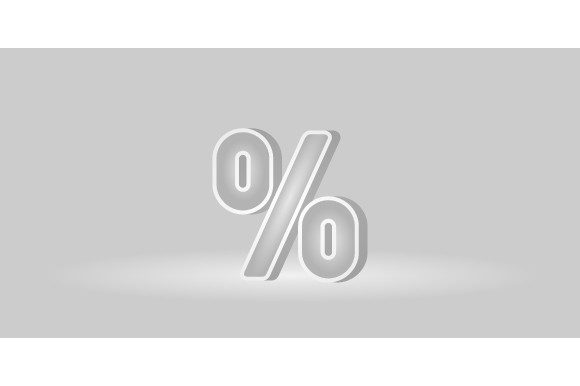
A 3D Realistic Percentage Design Vector refers to a graphical asset that utilizes vector-based technology to create three-dimensional representations of statistical data, specifically focusing on percentage values. Unlike flat 2D illustrations or raster images that can lose quality upon scaling, these designs are constructed using mathematical paths that ensure crisp edges and smooth gradients regardless of resolution. The "realistic" aspect implies the use of advanced shading, lighting effects, shadows, and texture mapping to simulate depth and physical presence, making the data appear tangible and immersive.
These assets are not merely decorative; they serve a functional purpose in communicating quantitative information quickly and effectively. By adding dimensionality to abstract numbers, designers can guide the viewer's eye toward key performance indicators (KPIs), growth metrics, or survey results with greater clarity and engagement.
Technical Specifications and File Formats
One of the primary advantages of utilizing a professional-grade 3d Realistic Percentage Design Vector is the versatility provided by its file formats. When acquiring such an asset, users typically receive a comprehensive suite of files designed to accommodate different stages of the workflow:
- AI (Adobe Illustrator): This native format allows for deep editing capabilities. Designers can manipulate individual shapes, adjust color palettes, modify text, and alter the 3D rendering parameters without losing quality. It is essential for customizing the design to match specific brand guidelines.
- EPS (Encapsulated PostScript): Widely compatible with various desktop publishing software, including older versions of Adobe InDesign and CorelDRAW. This format ensures that the vector data remains intact when transferred between different operating systems or design environments.
- SVG (Scalable Vector Graphics): Ideal for web development and responsive design. SVG files allow the percentage graphics to scale perfectly across all screen sizes, from mobile devices to large desktop monitors, while maintaining a small file size for fast loading times.
- PNG (Portable Network Graphics): A rasterized version with transparency support. This format is perfect for quick integration into presentations, social media posts, or email newsletters where editing the vector source is unnecessary.
- JPG (Joint Photographic Experts Group): A standard image format suitable for print materials and web banners where transparency is not required. It offers broad compatibility but lacks the scalability of vector formats.
Strategic Benefits for Business Communication
The decision to incorporate a 3D Realistic Percentage Design Vector into a business banner or background often stems from the need to enhance data storytelling. In an era where attention spans are short, static charts can fail to engage viewers. The realistic 3D effect adds a layer of sophistication and professionalism that can elevate the perceived value of the content being presented.
For marketing teams, these designs facilitate faster comprehension. The human brain processes visual information significantly faster than text. By presenting a percentage within a realistic 3D context, the message becomes immediately apparent, reducing cognitive load for the audience. This is particularly effective in sales funnels, annual reports, and promotional landing pages where conversion depends on immediate understanding.
Furthermore, the ability to customize the AI and EPS files allows businesses to maintain brand consistency. Colors can be adjusted to align with corporate identity, and the perspective of the 3D element can be modified to fit the composition of the overall layout. This flexibility ensures that the graphic acts as a cohesive part of the design rather than a disjointed addition.
Considerations and Potential Tradeoffs
While the benefits are substantial, there are important tradeoffs and considerations to evaluate before integrating these assets. The primary constraint lies in the complexity of the final output. Highly detailed 3D realistic designs can result in larger file sizes, particularly if high-resolution PNGs are used extensively across a website. This may impact page load speeds, necessitating optimization strategies such as compression or lazy loading.
Another consideration is the aesthetic trendiness. Realistic 3D styles have been popular for several years, but design trends evolve rapidly. While currently effective, a hyper-realistic style might feel dated compared to emerging flat or minimalist trends in certain sectors. Businesses must weigh the longevity of the asset against the specific timeline of their campaign.
Additionally, accessibility should not be overlooked. While visually striking, complex 3D graphics can sometimes obscure text or reduce contrast ratios, which can be problematic for users relying on screen readers or those with visual impairments. Designers must ensure that the underlying data is still accessible through alternative text descriptions or clear typography overlaid on the design.
Situational Fit and Alternative Approaches
A 3d Realistic Percentage Design Vector is a strong fit for industries that prioritize innovation, technology, finance, and health. In these sectors, a polished, high-tech aesthetic reinforces credibility and authority. For example, a financial firm presenting Q4 growth figures would benefit from the weight and solidity that realistic 3D elements convey.
Conversely, alternatives may be worth considering for brands aiming for a more organic, approachable, or eco-friendly image. In such cases, hand-drawn illustrations, soft pastel flat icons, or animated data visualizations might better align with the brand voice. If the goal is to present raw, unfiltered data, a simple, clean 2D chart might offer greater transparency and trustworthiness than a stylized 3D graphic.
For web developers focused strictly on performance, lightweight SVG animations or CSS-generated charts might be superior choices. These methods reduce server load and improve interactivity without the heavy lifting associated with rendering complex 3D assets.
Decision-Making Insights for Professionals
Selecting the right design asset requires a clear alignment with project goals. Before purchasing or downloading a 3D Realistic Percentage Design Vector, stakeholders should ask specific questions regarding the intended medium and audience. Is the banner primarily for print, requiring high-resolution JPG or EPS files? Or is it for a dynamic web environment where SVG interactivity is preferred?
It is also crucial to assess the team's technical capability. If the marketing team includes skilled graphic designers who can edit the AI source files, the investment in a customizable vector pack yields higher long-term value. However, if the users rely solely on non-editable image formats, the cost-benefit ratio may shift, and pre-rendered PNGs might suffice.
Ultimately, the effectiveness of a 3d Realistic Percentage Design Vector depends on execution. The design must be balanced with sufficient whitespace, legible typography, and a clear hierarchy. When used correctly, these assets transform dry statistics into compelling visual narratives that drive engagement and inform decision-making. By carefully evaluating the tradeoffs and ensuring the design aligns with the broader communication strategy, businesses can leverage these tools to achieve their objectives efficiently.